


Acoustic Wallcovering NRC Ratings for Quiet Offices and Condos
To reduce noise with acoustic wallcovering, specify NRC 0.35 to 0.60 for moderate echo control and NRC 0.70 or higher where speech, footsteps, and hard finishes create sharper reverberation. In most Miami office and condo interiors, meaningful improvement starts when 20% to 40% of the available wall area uses absorptive material, paired with soft ceilings, rugs, furnishings, or other sound-absorbing finishes.
Noise control is rarely solved by one product. A wallcovering can make a Brickell amenity lounge feel calmer, help a Coral Gables conference room sound more composed, or reduce harsh reflections in a Miami Beach condo corridor. But its performance depends on the NRC rating, installed surface area, substrate, room volume, and the rest of the finish palette.
For architects and interior designers, the goal is not just a quieter room. The goal is a room that supports its use without disrupting the visual concept.

NRC ratings explain how much sound a wall finish absorbs
NRC means Noise Reduction Coefficient. It is a single-number rating that describes how much sound a material absorbs in a lab test. The scale usually runs from 0.00 to 1.00.
A material with NRC 0.00 reflects nearly all tested sound energy. A material with NRC 1.00 absorbs nearly all tested sound energy. Many acoustic wallcoverings fall somewhere between 0.30 and 0.90, depending on thickness, fiber content, backing, mounting method, and air space.
NRC is based on sound absorption at four mid-frequency bands:
250 Hz
500 Hz
1,000 Hz
2,000 Hz
Those frequencies matter because they cover much of the range associated with speech clarity. That makes NRC useful for offices, condo amenity rooms, corridors, wellness rooms, club rooms, elevator lobbies, and private residences.
NRC does not measure sound blocking. A wallcovering with a high NRC can reduce echo inside a room, but it will not stop a neighbor’s music from passing through a demising wall. For that, the assembly needs isolation, mass, sealing, and an STC-based strategy.
NRC rating | What it usually means | Common design use |
0.00 to 0.20 | Low absorption | Decorative wallcoverings, painted drywall, stone, glass, tile |
0.25 to 0.30 | Light absorption | Mild echo reduction in smaller furnished rooms |
0.35 to 0.60 | Moderate absorption | Useful balance for lounges, corridors, and meeting rooms |
0.65 to 0.80 | Strong absorption | Good for speech-heavy spaces and hard-surface interiors |
0.85 to 1.00 | Very high absorption | Best for rooms with strong reverberation concerns |
In South Miami homes with terrazzo floors, glass sliders, and minimal drapery, even a moderate NRC wallcovering can change the feel of the room. In Brickell high-rises, where concrete, glass, and hard tile dominate, higher absorption usually pays off faster.
Acoustic wallcovering works by reducing reflected sound
Sound in a room has two main behaviors. Some sound travels directly from the source to the listener. The rest strikes surfaces and reflects around the room. When too much sound reflects, the room feels loud, harsh, or tiring.
Acoustic wallcovering reduces those reflections. It does not make the room silent. It shortens the decay of sound after speech, footsteps, or movement.
That can improve several common design problems:
Speech buildup
Conversations feel less layered in lounges, waiting areas, and shared residential spaces.
Flutter echo
Parallel hard walls stop producing a sharp, repeated slap.
Harshness
Rooms with glass, stone, tile, or exposed concrete feel less brittle.
Comfort
Occupants can talk at a lower level because the room is not feeding sound back at them.
Miami interiors often need this balance. A Miami Beach condo may call for a light, coastal palette with hard flooring and large glazing. A Coral Gables office suite may need refined conference rooms without visible acoustic panels. A Doral hospitality project may need durability, cleanability, and better sound control in the same finish.
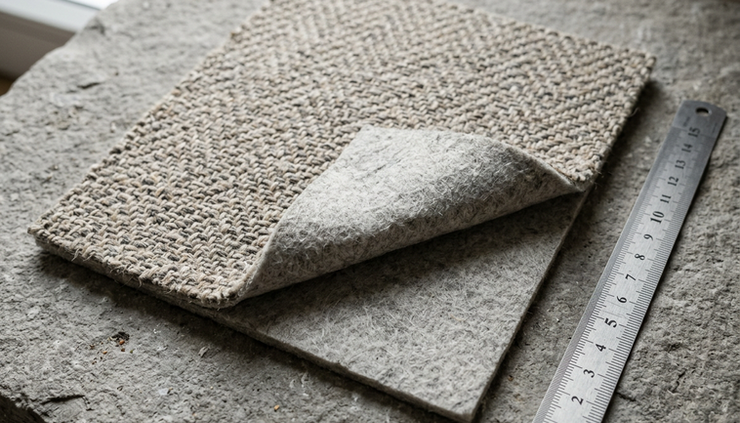
The wallcovering is doing two jobs at once. It contributes to the material story, and it helps manage the room’s acoustic energy.
The right NRC depends on the room and the finish palette
There is no single NRC rating that fits every Miami project. The right number depends on what the room is used for, how much wall area is available, and how reflective the other surfaces are.
A small room with carpet, upholstered seating, drapery, and acoustic ceiling tile may only need a modest acoustic wallcovering. A tall condo lobby with porcelain slab walls, glass railings, and polished stone may need much more absorption.
Use the table below as a practical starting point for early design conversations.
Space type | Common noise issue | Suggested NRC range | Design note |
Condo corridor | Footsteps, voices, elevator lobby spillover | 0.35 to 0.70 | Focus on long wall runs and elevator-adjacent zones |
Amenity lounge | Layered conversations, media sound, hard floors | 0.60 to 0.85 | Combine wallcovering with upholstered furniture |
Conference room | Speech reflections, poor clarity | 0.65 to 0.90 | Treat side or rear walls to reduce bounce |
Private condo living area | Harsh sound from glass and tile | 0.35 to 0.70 | Place absorption behind seating or media zones |
Fitness or wellness room | Impact noise, music reflections | 0.70 to 0.95 | Wall treatment helps echo, not structural vibration |
Hospitality corridor | Rolling luggage, voices, hard finishes | 0.50 to 0.75 | Durability and maintenance matter as much as NRC |
For early planning, think in terms of absorption coverage:
Room condition | Useful wall coverage target |
Soft room with rugs, drapery, and upholstered furniture | 10% to 20% |
Mixed room with some hard finishes | 20% to 30% |
Hard room with glass, tile, stone, or concrete | 30% to 40% |
Tall or highly reflective room | 40% or more, often with ceiling absorption |
These are design planning ranges, not final engineering numbers. A formal acoustic model may be needed for performance-critical spaces.
The basic math is simple. A surface adds absorption based on area multiplied by its absorption rating. For example, 200 square feet of wallcovering with NRC 0.70 provides about 140 sabins of absorption in a simplified estimate. That does not predict the whole room by itself, but it helps compare options.
NRC should be matched to the wall assembly and installation method
A product’s lab rating only matters if the installed assembly supports it. A thin acoustic textile directly adhered to gypsum board will not perform the same way as a thicker system with a resilient backing or air space.
Ask for test data that clearly states:
The tested product name
Material thickness
Mounting method
Substrate
Air gap, if any
Test standard
NRC rating
Frequency absorption data, if available
The frequency data matters because two products with the same NRC can behave differently. One may absorb more speech-range sound. Another may perform better at higher frequencies but do little for lower male voices, mechanical hum, or bass-heavy media.
For Miami projects, installation conditions also deserve attention. Coastal humidity, air-conditioning patterns, direct sun, and maintenance routines can affect product selection. A Miami Beach condo corridor may need mildew resistance and cleanability. A Brickell amenity floor may need impact resistance near entries and elevator banks. A Coral Gables residential project may call for a softer hand and a seamless look.
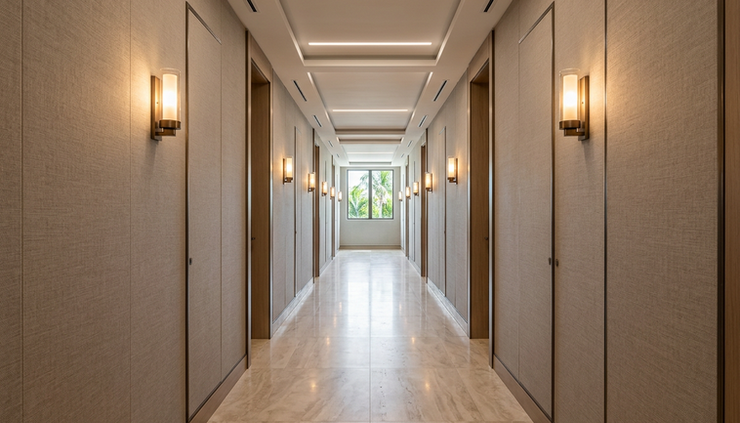
A good specification should also address edges, seams, corners, and transitions. These details protect the finish and the acoustic value.
Key specification notes include:
Seams
Confirm whether the product is designed for butt seams, panelized installation, or wrapped panels.
Corners
High-traffic condo corridors often need corner protection or durable detailing.
Backing
Felt, foam, textile, mineral fiber, or composite backings change both performance and thickness.
Fire rating
Confirm code requirements for the project type and location.
Cleanability
Public corridors and amenity areas need maintenance guidance before final approval.
Adhesive
Use the manufacturer’s recommended adhesive and substrate preparation.
Acoustic wallcovering NRC ratings become much more useful when they are tied to these installation realities.
Do not confuse absorption with sound isolation
This is one of the most common mistakes in acoustic finish selection. Absorption and isolation solve different problems.
Acoustic goal | What it means | Product metric to review |
Reduce echo inside a room | Absorb reflected sound | NRC, SAA, frequency absorption |
Block sound between rooms | Reduce sound transmission | STC, wall assembly data |
Reduce footfall or impact noise | Limit vibration through structure | IIC, floor assembly data |
Improve speech privacy | Combine absorption and isolation | NRC plus STC strategy |
A wallcovering can make a South Miami dining area feel less sharp during a dinner party. It will not stop sound from a neighboring unit if the demising wall has gaps, weak seals, or poor construction. In a condo tower, that distinction matters because client complaints often describe both issues as “noise.”
For office planning, the distinction is just as important. A conference room may need interior absorption so speech sounds clear inside the room. It may also need upgraded wall construction, door seals, and ceiling plenum control so speech does not leak out.
Absorption improves the sound within the space. Isolation controls transfer between spaces. Most successful projects need some of both.
Miami design conditions often make NRC more important
Many Miami interiors share the same acoustic challenge. The materials that perform well visually and practically in a warm, coastal climate tend to reflect sound.
Common reflective finishes include:
Porcelain tile
Natural stone
Polished concrete
Large-format glass
High-gloss millwork
Metal accents
Painted gypsum board
Exposed structure
These materials show up across Brickell condo towers, Coral Gables commercial interiors, Doral mixed-use projects, South Miami residences, and Miami Beach hospitality spaces. They look clean and durable, but they can produce long sound decay if left untreated.
Acoustic wallcovering helps because it can be placed where acoustic panels might feel too technical. It can read as fabric, texture, plaster-like surface, leather alternative, or tailored wall finish. That flexibility makes it useful in spaces where the acoustic treatment needs to disappear into the design.
Good locations include:
Behind banquettes or lounge seating
Along condo corridors
On rear walls of conference rooms
Around elevator lobbies
Behind reception seating
Inside media rooms
On long parallel walls
In clubhouse and amenity spaces
Avoid placing all absorption on one small feature wall if the noise problem affects the whole room. A beautiful wall behind a sofa may help, but it may not correct flutter echo between two long hard surfaces. Distribution matters.

How to specify acoustic wallcovering with confidence
Start with the room’s acoustic goal. Then select the finish. That sequence prevents the common problem of choosing a beautiful material that does not absorb enough sound.
A clear specification path looks like this:
Define the noise issue
Is the problem echo, speech clarity, footstep noise, sound transfer, or overall loudness?
Set a target NRC range
Use NRC 0.40 to 0.60 for light to moderate control. Use NRC 0.70 or higher for more reflective rooms.
Estimate treated surface area
Identify realistic wall zones early, before art, millwork, mirrors, and screens consume the best locations.
Review full acoustic data
Ask for NRC, frequency absorption, mounting method, and assembly details.
Coordinate with code and maintenance
Confirm flame spread, smoke development, cleanability, and humidity suitability.
Mock up the finish
Review seams, texture, lighting response, corner conditions, and touch.
Coordinate with the whole room
Include ceilings, furniture, rugs, window treatments, and doors in the acoustic strategy.
For high-end condo and commercial work in Miami, mockups are especially valuable. Strong sunlight can reveal seams. Grazing light can exaggerate texture. Air-conditioning supply patterns can affect dust marks over time. A material that works on a sample card may need different detailing on a 40-foot corridor wall.
A practical Miami specification example
Consider a Brickell condo amenity lounge with porcelain flooring, glass on two sides, gypsum board walls, and upholstered seating. The design team wants the room to feel warm, not padded or technical.
A reasonable early approach might include:
Acoustic wallcovering on the longest solid wall
NRC target of 0.70 or higher
Treated wall area near 30% of available wall surface
Upholstered seating groups to add soft absorption
Area rugs where maintenance allows
Drapery or acoustic shades where they fit the design
Acoustic review if amplified sound or events are planned
For a Coral Gables conference room, the target might shift. Speech clarity becomes more important. The design may use acoustic wallcovering on the rear wall and one side wall, with an NRC between 0.65 and 0.90, plus ceiling absorption and better door seals.
For a Miami Beach condo corridor, durability may lead the decision. A wallcovering around NRC 0.50 to 0.75 can soften voices and footsteps, but the finish also needs to resist scuffs, luggage contact, humidity, and frequent cleaning.
The right product is the one that meets the acoustic need without fighting the architecture.
The takeaway for quieter offices and condos applying acoustic wallcovering NRC Ratings
NRC gives architects and designers a practical way to compare acoustic wallcoverings, but the number only tells part of the story. For most Miami interiors, NRC 0.35 to 0.60 supports moderate echo control, while NRC 0.70 and above is better for hard, reflective, speech-heavy spaces.
The strongest results come from pairing the right NRC with enough treated area, good distribution, proper installation, and realistic expectations. Use absorption to calm the room. Use isolation to block sound between rooms. In Brickell, Coral Gables, South Miami, Doral, and Miami Beach, that distinction is often the difference between a finish that looks acoustic and a room that actually feels quieter.


Comments