


Hospitality Design Starts with Performance: Balancing Visual Intent with Operational Reality
In premium commercial and hospitality design, the initial reaction to an interior environment is almost always driven by its visual narrative. The color palettes, lighting schemes, and textures evoke immediate emotion. However, while aesthetics win awards, material performance is what keeps an interior open for business.
Public interiors—such as hotel guest suites, high-traffic restaurant lounges, and multi-family lobbies—are demanding ecosystems. They are subjected to an continuous volume of luggage friction, heavy maintenance machinery, and demanding sanitization protocols.
When delicate, non-commercial grade materials are specified in these high-impact areas, the illusion of luxury quickly degrades into a series of visible scuffs, frayed edges, and torn panels. At Dress Your Walls, we help specifiers break this cycle by shifting the focus to strategic material selections that perform as beautifully as they look.
1. The True Cost of High-Traffic Friction
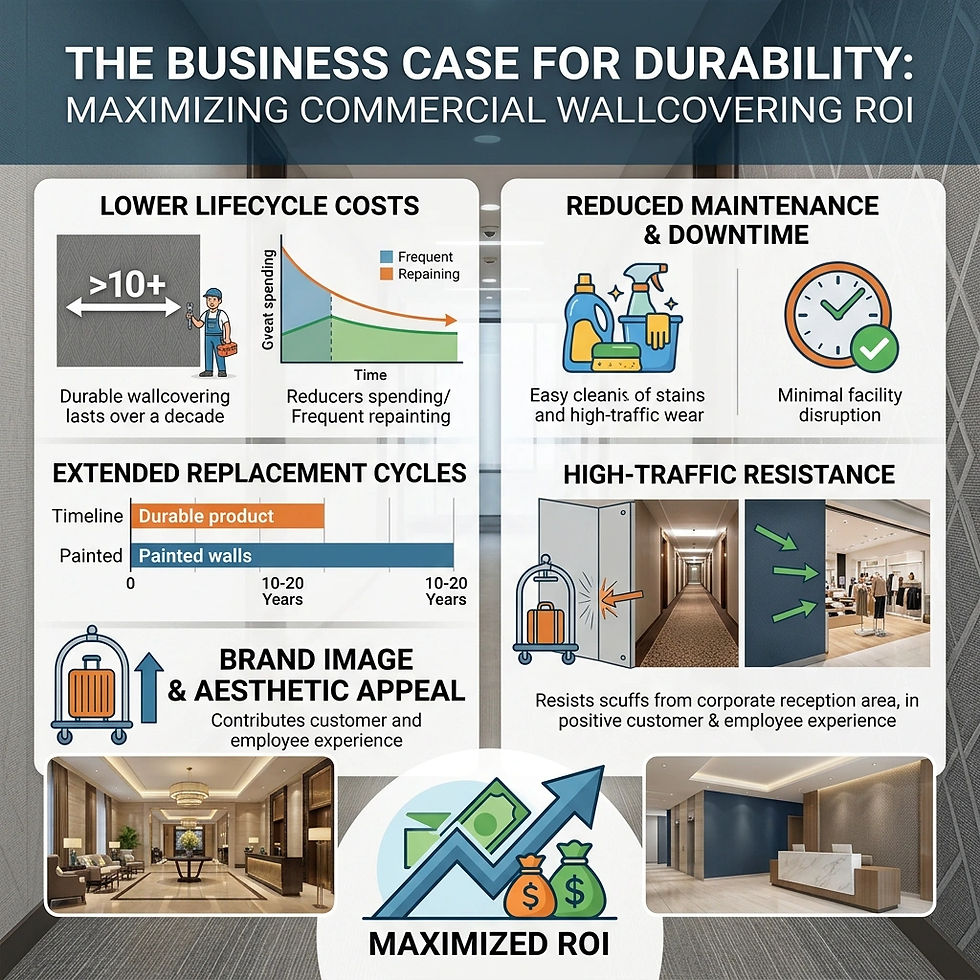
Consider the lifecycle of a high-volume hospitality corridor or lobby entryway. A finish that cannot withstand a stray suitcase bump or an industrial cart impact isn't just a design liability—it is a financial deficit.
If a wall surface fails, the remediation process requires striking the damaged panels, re-patching the substrate, re-ordering product across potentially mismatched dye lots, and remobilizing field labor. When you factor in the operational loss of shutting down a revenue-generating hotel block or restaurant zone for repairs, the initial "savings" of a lower-spec product disappear entirely.
Specifying Type II Contract Grade materials ensures that your vertical planes act as a durable defensive layer, maintaining visual elegance under constant daily use.
2. Engineering Maintenance Out of the Equation
A beautiful interior design should never become an operational burden for the client's facilities team. Strategic material selection actively lowers post-handover maintenance overhead:
[Standard Wall Finish] ───> Year 1 Scuffs ───> Frequent Paint Touch-Ups / Patching (High Overhead)
[Type II Vinyl/Veneer] ───> Long-Term Durability ───> Simple Scrub-and-Clean Protocol (Low Overhead)
By prioritizing scrubbability, chemical resistance, and heavy tear-resistance per international WA-101 contract standards, designers can build out spaces that require nothing more than simple, low-cost cleaning routines to preserve their showroom-fresh character over a decade-long lifecycle.
3. The Direct Link Between Material Performance and Guest Loyalty
The physical condition of an interior speaks volumes about a hospitality brand’s identity. When a guest encounters peeling seams, stained textures, or cracked surfaces, it triggers a subconscious perception of neglect and poor property hygiene, immediately depressing customer satisfaction metrics and online reviews.
Pristine, structural material integrity acts as a silent cue for premium luxury. When finishes hold their structure and maintain uncompromised grain continuity over time, they build a sense of heritage, care, and cleanliness that directly elevates guest comfort, brand trust, and repeat business.
4. Designing for Compliant Longevity
True innovation in interior architecture means matching your aesthetic goals with the rigorous restrictions of local building codes. You should never have to compromise your design vision to meet safety metrics.
Our curated commercial lines integrate material beauty directly with contract engineering:
Certified Life Safety: Every item in our contract line is vetted to carry a strict ASTM E84 Class A Fire Rating (Flame Spread Index 0–25, Smoke Developed Index 0–450) to clear municipal building inspections easily.
Tactile Versatility: From highly structured heavy vinyl textures to flexible, real-timber wood sheet veneers, our catalog gives designers the technical capability to specify high-performance finishes across curved architecture, ceiling soffits, and high-impact transaction zones.
The Strategic Hospitality Specification Guide
Spatial Environment | Active Friction Risk | Performance Material Solution | Operational Benefit |
Hotel Elevator Lobbies | Heavy luggage impacts, cleaning carts. | Woven-backed Type II Vinyl or Flexible Wood Veneer. | Total tear-resistance; eliminates corner damage. |
Restaurant Dining Rooms | High food and beverage spills, chair scrapes. | Scrubbable, moisture-resistant performance surfaces. | Effortless sanitization without color or texture fading. |
Multi-Family Corridors | Continuous baseline foot traffic, move-in scuffs. | Highly structured, low-VOC commercial wallcoverings. | Drastically reduced callback cycles and painting overhead. |
Become a Strategic Design Partner in Hospitality Design
Great design isn’t validated on the day of the final photoshoot; it is validated five years down the line when the interior still looks impeccable under pressure. By placing material engineering at the very beginning of your design planning, you insulate your firm from liability, lower your client’s maintenance overhead, and protect your creative vision.
At Dress Your Walls, we speak the language of both design aesthetics and field execution. Let's look over your current hospitality drawing sets and match your vision with the precise performance specs it deserves.


Comments